Managing Haemorrhagic Shock in a Young Polytrauma Patient with Early Embolization in the Emergency Department

Published by Mehreen Khan
October 08, 2025
Dr. Md. Saif and colleagues report on a 21-year-old trauma patient where early embolization helped manage life-threatening haemorrhagic shock.
Managing Haemorrhagic Shock in a Young Polytrauma Patient with Early Embolization in the Emergency Department
Dr. Md. Saif, Dr Manpreet Singh, Dr Madhulika, Dr Sanjay Jaiswal
Max Super Specialty Hospital, Noida, India
A 21-year-old woman was brought to our emergency department after her two-wheeler collided with a bus. She was conscious but anxious and speaking in full sentences, with dangerously low blood pressure, tachycardic, and tachypneic with cold and clammy skin. Her abdomen was tender, and her right leg appeared shortened and deformed, suggesting a pelvic or femoral fracture. A trauma alert was activated immediately.
Initial assessment showed her airway was clear, breathing was adequate, and there were no signs of chest injury. She was given oxygen, cervical spine protection, and a pelvic binder. Two large IV lines were placed, and she received tranexamic acid stat followed by transfusion, pain relief, antibiotics, and antiemetics. A Massive Transfusion Protocol (MTP) was started, and she received multiple units of blood products.
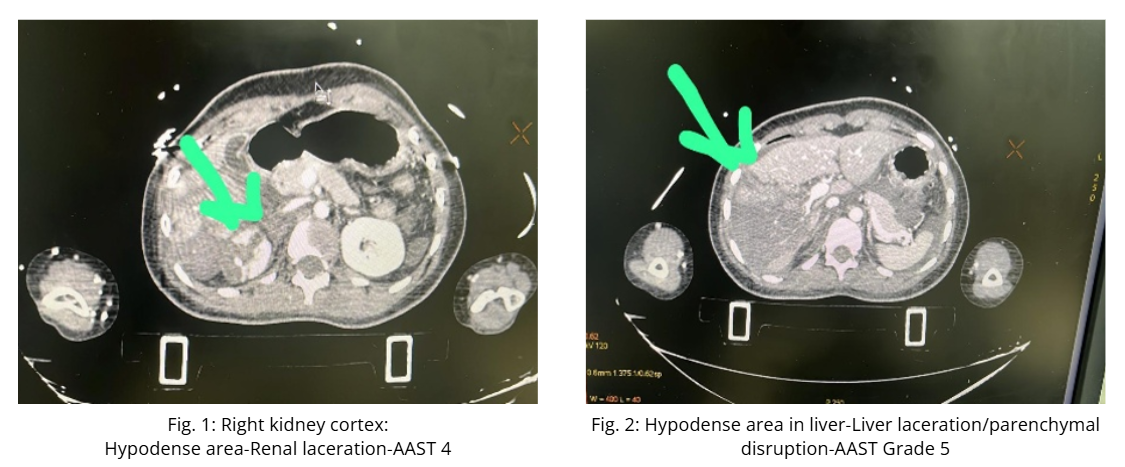
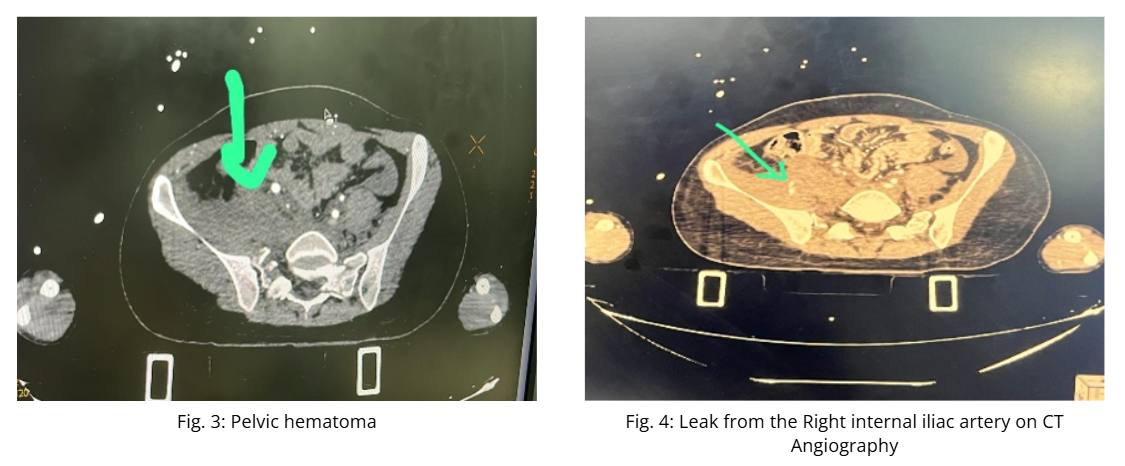
A bedside ultrasound (eFAST) showed free fluid in the abdomen, indicating internal bleeding. Once her blood pressure improved slightly with blood transfusion, she was taken for a full-body CT scan, including CT Angiography of the abdomen and pelvis. Imaging revealed liver and kidney lacerations, pelvic and sacral fractures, and active bleeding from the right internal iliac artery. She was immediately shifted to the cath lab, where the interventional radiology team performed embolization to stop the bleeding.
Despite successful embolization, she remained in shock and required inotropes to support her blood pressure. She was transferred to the ICU for further care, and her family was informed of the serious nature of her condition.
The case highlights the importance of early trauma team activation, rapid resuscitation, and the role of interventional radiology in managing life-threatening bleeding. Damage control resuscitation—including permissive hypotension, balanced blood transfusion, and early use of tranexamic acid—was key to stabilizing the patient. Embolization offered a minimally invasive way to control bleeding without surgery, especially in pelvic trauma, where traditional approaches may be limited.
Even after bleeding is controlled, such patients may remain at high risk due to the systemic effects of shock, inflammation, and organ stress. Coordinated care across emergency, surgical, radiology, and critical care teams is essential. This reinforces the need for well-equipped trauma systems and trained personnel to respond quickly and effectively to severe injuries.